Before a computer can carry out the “process” step from the previous activity, someone has to describe exactly what to do, in an order the computer can follow without any guesswork. That description is called an algorithm.
An algorithm is a sequence of instructions for a task.
Algorithms outside of computing
Algorithms are not unique to computers. Anything with a fixed set of steps, followed in order, is an algorithm:
- Making a cup of tea: boil the water, add a tea bag to the cup, pour the water over it, wait for it to brew, then remove the bag.
- Making a sandwich: lay out the bread, add the filling, close it, cut it if you like.
- Playing noughts and crosses: take turns placing a mark in an empty square, and stop as soon as three marks in a row win the game.
Change the order of the steps, or skip one, and the result changes too, or stops working entirely. That is exactly what makes something an algorithm rather than just a vague idea: it has to be precise enough that someone else (or something else) could follow it and get the same result.
An algorithm is not the same thing as a computer program. An algorithm is the idea, the plan of steps. A program is that plan written in a language a computer can actually run.
From algorithm to program
Algorithms that are converted into code become computer programs. Take the simplest possible algorithm:
OUTPUT "Hello, World"
That single instruction can be turned into a program in more than one language. In a block-based language like Scratch, it looks like this:
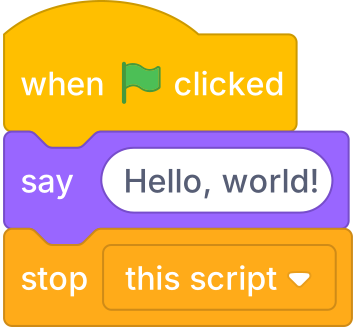
In Python, the same algorithm is one line of text:
print("Hello, World!")
Both versions do exactly the same thing: they run the same algorithm. Scratch expresses it as blocks that snap together, and Python expresses it as text that follows precise rules. This course uses Python.
Try it yourself
print("Hello, World!")
Run it, then change the text between the speech marks and run it again. From
here on, you will be writing algorithms as Python programs yourself. The next
chapter starts with the simplest Python statement of all: printing text to the
screen with print.